

If you’ve been following along with my serious of posts about multipotentiality, you may be wondering what any of the childhood tales have to do with the subject.
The posts come from an unfinished book that was supposed to be about how a man in his mid-30s (now 40) can have worked as a pizza chef, newspaper reporter, army reserves officer, retail sales associate, recreation events coordinator, social media marketing coordinator, online news editor and garden centre supervisor. It was to be about how I’ve also managed to pursue entrepreneurial endeavours in professional writing, website development and web design brokerage, online marketing consulting and then, just to spice things up, residential property re-development. Finally, it intended to explain why I’ve served on the boards of directors of various local, regional and national organizations. After all, by the time I was 19, I was traveling regularly across the country for meetings in my role as Atlantic Canada Director, Director of Marketing and Fundraising, and Vice President of a national non-profit organization dedicated to promoting non-violent conflict resolution amongst youth. How did that happen?
I promise, the childhood stories will make sense shortly.
In 1972 someone by the name of R.H. Fredrickson said a multipotential person is “any individual who, when provided with appropriate environments, can select and develop any number of competencies to a high level.”
Before the term was assigned to human characteristics, however, it was a scientific term.
Merriam-Webster says the word multipotential was first used to describe cells “having the potential of becoming any of several mature cell types”.
I like looking at that definition because of one important word in it: mature. A multipotential cell isn’t one that tries to be one of several cell types but fails miserably at it. It’s a cell that has the potential to be fully—maturely—any of several cell types.
Similarly, a multipotentialte doesn’t simply prefer to try out a few different things or have the ability to attempt to succeed in various fields. Nope, if you look back at my definition in my first post on this topic, multipotentiality is about having the ability and preference to excel in many fields. And why can a multipotentialite excel in more than one field? Curiosity! Most multipotentialites possess a strong intellectual or artistic curiosity.
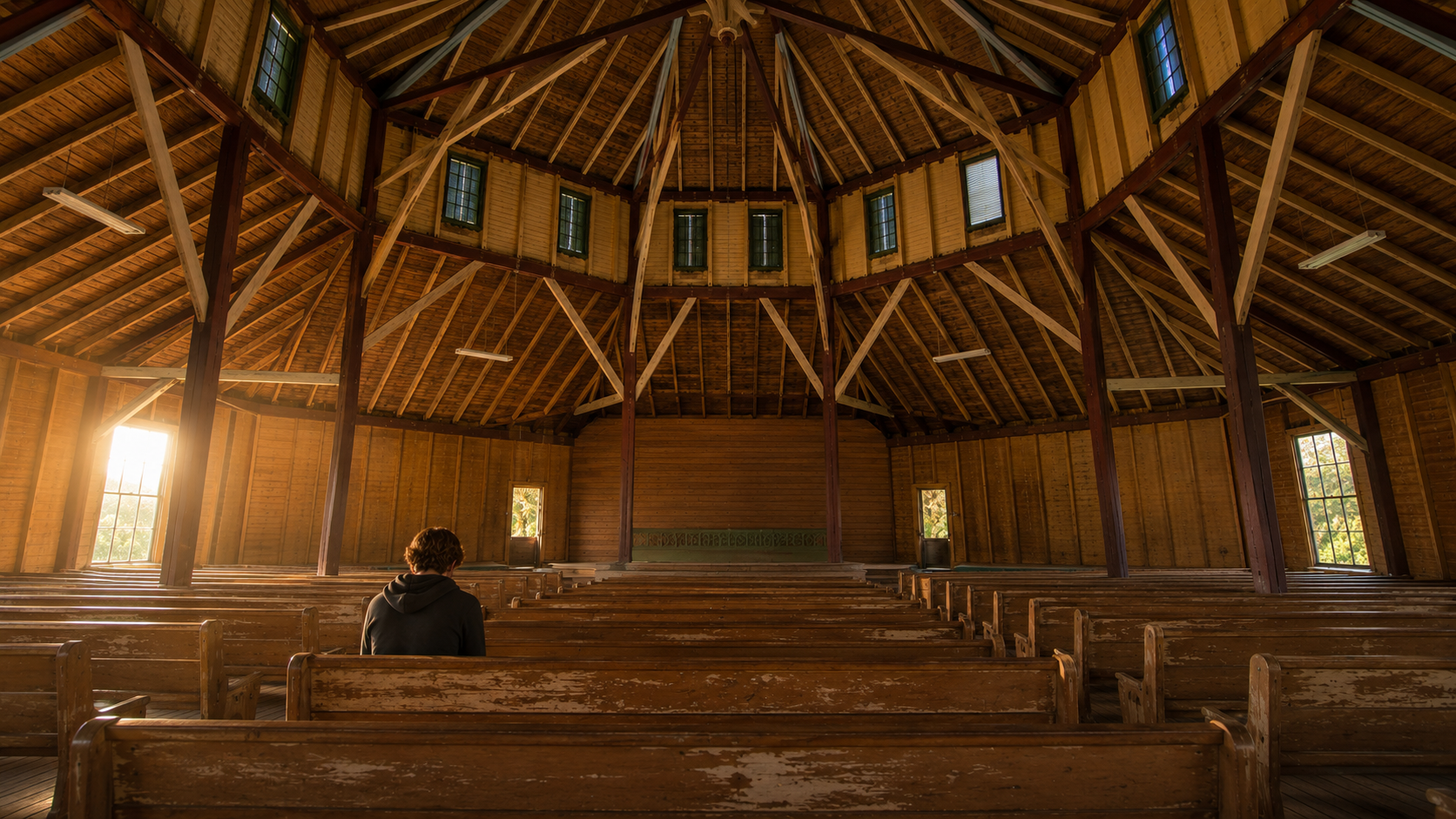
My curiosity was borne out of opportunities to explore and adventure as a small boy, and only grew from there. While I took that curiosity in many directions, applying it to my learning, careers and life in general, I also maintained the core curiosity to simply explore unknown places. As a teenager in rural New Brunswick, I peeked inside a nearby abandoned one-room school house and through the dark crevasses of barns and abandoned farm houses. As I got older, I became more fascinated (and obsessed) with exploring abandoned things, and made trips to Estonia to explore abandoned soviet mining towns and the island of San Miguel in The Azores to explore an abandoned mountain-top hotel. Most recent abandoned explorations include an abandoned hospital and the spectacular abandoned Petrova Gora monument in Croatia. I have always been, and always will be, curious.
For most of my adult life, until the week I started writing this book, I felt broken, because I didn’t conform to modern ways of thinking about the pursuit of passion.
I say modern, because society didn’t always view multipotentiality as indecisiveness, flighty, selfish or unstable. Remember that in the renaissance days, it was considered ideal to have multiple intellectual and creative passions.
As I’ve worked my way through adulthood, moving between different jobs and launching multiple small businesses with varying levels of success, I have often been left to think there’s something wrong with the way I’m doing things. I think of one man who goes to my church and loves to ask me what I’m doing these days, not because he’s particularly curious about my life, but because he seems to enjoy judging me. Despite being several inches shorter than me, he somehow finds a way to look down his nose at me, wondering why I can’t just get a real job, with a predictable salary, a good pension and a boss that tells me what to do. (This was originally written when I wasn’t employed full-time.) He has actually made me feel quite bad about my career choices in the past, but I recognize that I only feel bad about it if I decide to feel bad about it, so I’m taking away his power now and celebrating my multipotentiality through the writing of this book. (Or… series of blog posts.)
It’s important to recognize that multipotentiality isn’t just about jobs and careers. Moreso, it’s about learning, and by learning I absolutely don’t mean “being taught.” A multipotential person is on a constant quest for understanding about things for which they’ve become passionate. Without the passion, there is no curiosity, and without that curiosity, it becomes difficult to learn about a subject. For this reason, multipotentialites sometimes struggle in school and may even appear to be not particularly smart.
My two worst marks in high school were in language classes. I failed my Grade 12 French class and I received a mark of just 62% in my Grade 12 English class. I later went on to study journalism and work as a newspaper reporter, and although far from bilingual I am more functional in the French language now than I ever was in high school. Why? Because of passion-induced curiosity, or lack thereof while in school.
The Shakespearian play we were reading in Grade 12 didn’t excite me. Despite it being the cause of my almost failing English that year, I don’t even remember what the play was. It bored me. And because it bored me, because I lacked passion for it, I had no curioisty for it and therefore I flunked my final exam. But I did have a passion for writing. I enjoyed writing and wanted to improve that skill. So when I applied to go to journalism school, I had to make a case for why I should be admitted into the program despire such a low mark in English. Fortunately, I already had clippings of published newspaper stories that I was able to include with my submission.
“Suivre M. Gallant”
I had a similar lack of passion for French in Grade 12. So again, lacking any real passion for the subject, having no curioisity to learn it, I struggled. The mark in the class was made up largely from one project. A video. We were expected to produce a video, in French, which would be shown to the class, and marked on its use of the French language. In that I found something to be curious about. I’d never produced a video before. So I put together a shot list and borrowed a camera.
My partner for the project was my friend Dave. Our teacher was a fellow named Mr. Gallant. He was a friendly teachers, laid back and a lot of fun. So Dave and I set out to capture footage for our epic film: “Suivre M. Gallant”, a poor translation intended to mean “Following Mr. Gallant.” It was to be a story of the day in the life of our favourite French teacher. Once we’d finished filming, we brought the VHS tape we’d recorded on back to the school, used a device that turned the video into a digital format, and I quickly self-taught myself how to use an application to cut and paste footage, create transitions and basic effects and insert rolling credits at the end. (It was 2002, the tech was pretty new.) I’d found something for which I was passionate, for which I was curious, and so I learnd a skill quickly and applied that newfound ability to produce a video. Once I’d completed my masterpiece, it was ready to be shown to the class.
Dave and I set up the computer and Mr. Gallant took a seat nearby. (We didn’t have the means to put our video back onto VHS to show it on a TV screen, so we lugged the iMac we’d used for editing up to the classroom and set it on a desk at the front of the room.)
I pressed play, and the words “Suivre M. Gallant” appears on the screen. Mr. Gallant had no idea what our video was about.
The text faded away and the video began in a familiar setting. It was the same room in which we were watching the video. Another teacher had granted us access to Mr. Gallant’s classroom during a noon hour. I’d filmed as Dave took a seat at the teacher’s desk and opened a drawer. He reached inside and as he would pull out an object, he would exclaim what he’d found.
“Un livre,” he said as he pulled out a book.
“Un crayon. Une agrafeuse. Papiers. Une montre.” (A pencil. A stapler. Papers. A watch.)
The screen faded to black and then came back to life, zooming in on the teacher’s smoking area at the side of the school. Hiding in the bushes, we’d secretly filmed our French teacher in one of his most-frequented areas of the school.
“Il fume.” He smokes.
We waited at the same vantage point at the end of the day, then filmed as he walked toward his little grey pick-up truck. Quickly, we ran to my parents’ station wagon and, keeping a safe distance, we pursued the truck, filming all the while.
In the classroom, Mr. Gallant watched in silence. The mouths of some classmates dropped as they witnessed our brazen video concept. Others laughed.
At one point in the video, Mr. Gallant’s truck swerved across the yellow line into opposing traffic and then back to its own lane. The video backed up and then showed the swerve again, this time in slow motion, before continuing on. The camera pointed down at the speedometer. Mr. Gallant was in a hurry, travelling 40 km/h over the posted 80 km/h speed limit.
“Il speeds.”
We kept up.
The teacher arrived at his home a few minutes away from the school. We filmed as he got out of his truck and went inside. We then conducted a tour of the neighbourhood.
“La maison de monsieur Gallant.”
“Une rue.”
“Un hydrant de feu.”
Our video was entertaining, albeit a little creepy. The only thing it lacked was French dialogue. Actually, it lack French pretty-much-everything. It was a demonstration of a new skill in videography, but it didn’t demonstrated any sort of mastery of a language. The limited French that was used, was broken and mixed with English words. Not even an A for effort, we failed the assignment.
Actually learning French
It wasn’t until I found a reason to become passionate about French that I really started to learn the language. Now, don’t come up to me on the street and expect me to start chit chatting about politics in both of Canada’s official languages. As I already said, I’m not bilingual. But I have a much better understanding of the French language now than I did in high school, and not because I’ve taken any additional language training.
I worked for two summers as an officer at an army cadet training centre in Alberta where youth came from across the country to engage in rock climbing, white water kayaking, glacier trekking and other outdoor adventure activities while developing their skills as young leaders. Some of the cadets came from Quebec and didn’t speak any English. The expectation was that classroom instruction would take place bilingually and that interviews with the cadets would be conducted in their preferred language.
My first summer I worked as “platoon second-in-command”, responsible along with the platoon commander for a group of about 25 teenages. Some of the officers were fully bilingual. For those who weren’t, some embraced the challenge more than others. Those who didn’t speak any French were paired up with officers who did. In my case, my platoon commander could speak French without difficulty, but I didn’t use that as a crutch. I worked with French-speaking officers to develop my lesson plans in both languages. I may have had to read from the page a lot, but I was able to teach to the entire class with minimal translation assistance.
I’d become passionate about learning French. My curiosity drove me to learn quickly. At the start of the summer when I interviewed French-speaking cadets, asking them about their experience with things like mountain biking, I used actions to show riding a bike up and down a mountain to fill in the gaps in my vocabulary. When I had to counsel a cadet for misbehaviour, I did so at my computer with a translation website open on my laptop. But by the end of the summer I’d absorbed a great deal of vocabulary and had pieced together so much of the French grammar Mr. Gallant had tried so hard to instill in me, that I found myself saying full sentences in French that I couldn’t have composed on my own just a few weeks earlier.
Fast forward about seven years when I was working at the cadet trainig centre in New Brunswick as a company commander, responsible for over a hundred cadets and staff, and I was able to deliver my welcome briefings in both languages and resolve minor conflicts with French-speaking cadets. In my current job, I review translations of documents to catch errors. On a federal government language test three years ago I achieved a basic oral proficiency level and intermediate reading comprehension score. (My written composition/grammar ability didn’t score a level.)
So what does this all mean?
The intense curiosity that accompanies passion is what drives a multipotentialite to learn a skill. Sometimes that skill is mastered quickly or over time, and often times it’s learned just enough to be functional, before moving on to learn something else. Just because a skill isn’t necessarily mastered doesn’t mean the multipotentialite doesn’t have the ability to excel in that area. It may just be that their curiosity is moving them in another direction and they don’t feel the need to learn any more about a subject. They may be scanning; just skimming the pages to get the information they need.
We got one-upped
The year after I finished Grade 12, a pair of students learned from the mistakes Dave and I made in our French video. They created a film that included conversational use of the French language. The opening scene of their movie took place in Mr. Gallant’s living room—when he wasn’t home.





Leave a Reply