
Yesterday I wrote a blog post that generated a bit of discussion, but I think I may have been a bit unclear about my point.
In my post Beyond Saying No: The Courage to Build New Brunswick’s Future, I did not intend to suggest that because natural gas is still needed today or because data centres are likely to become an increasingly important part of our economy, we should simply say yes to them and try to minimize environmental impacts.
That’s not my argument at all.
I’m not suggesting we should embrace fossil fuel extraction and consumption. I’m not suggesting we should welcome energy-intensive data centres regardless of their environmental footprint.
I’m suggesting almost the opposite.
If these industries and activities are going to be part of our foreseeable future, shouldn’t we be trying to make them as environmentally responsible as possible? And shouldn’t New Brunswick be looking for opportunities to lead that effort?
Why should we simply accept that data centres require enormous amounts of electricity when we could be investing in technologies that make them more energy efficient or finding cleaner ways to generate the electricity they need?
Using Today’s Resources to Build Tomorrow’s Solutions
We know that the world still has a need for fossil fuels today. That’s a reality, whether we like it or not. (Most of us don’t like it!)
If New Brunswick can responsibly develop its natural gas resources, with appropriate environmental safeguards, and contribute to meeting that existing demand, why wouldn’t we consider the opportunity?
And why couldn’t we make a deliberate commitment to using a portion (or even all) of the resulting government revenues to invest in the future?
Imagine dedicating those revenues to clean energy research, renewable energy infrastructure, energy storage, and the development of new technologies.
We could be using the resources available to us today to help create a New Brunswick that is less dependent on those very same resources tomorrow.
We could meet a need that exists today while investing in solutions that benefit future generations.
That’s the kind of thinking I want to see!
Turning Challenges Into Opportunities
Consider data centres. We know they’re going to become an increasingly important part of the global economy. The demand for computing power isn’t disappearing. It’s increasing.
The International Energy Agency projects that electricity consumption by data centres will nearly double by 2030, reaching approximately 950 terawatt-hours annually.
This isn’t speculation about some distant technological possibility. It’s a documented trajectory of economic and technological development.
One of the biggest challenges with data centres is their enormous demand for electricity.
So what do we do?
Do we simply say we shouldn’t have data centres because they consume too much energy?
Or do we ask how we can make data centres more energy efficient? And if their energy requirements remain substantial, how do we generate the electricity they need using clean, renewable sources?
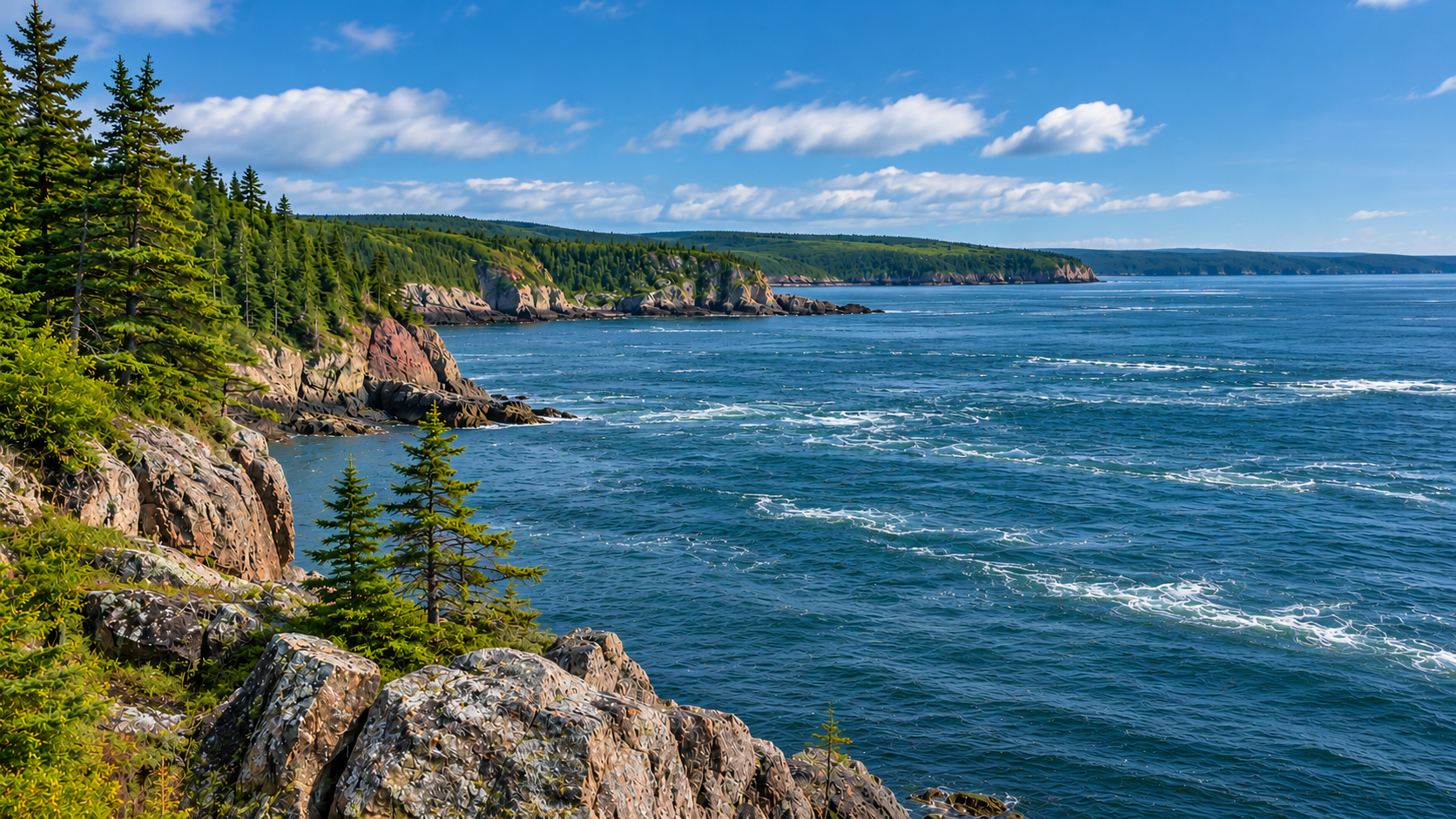
This is where I think New Brunswick has a particularly interesting opportunity: we have an extraordinary tidal energy resource right here in Atlantic Canada.
We’ve tried to harness that resource before, with mixed results. There are legitimate technological, economic, and environmental challenges. But why should that be the end of the conversation? What if we approached those challenges as opportunities to innovate? What if we invested in developing tidal energy technology that could generate substantial amounts of clean electricity while protecting our marine ecosystems?
What if we could combine tidal energy with other renewable sources and energy storage to provide reliable electricity to data centres?
And what if we were equally thoughtful about where those data centres are located, ensuring that their water requirements, energy infrastructure, and impacts on surrounding communities are properly considered?
We could potentially become leaders in something much bigger than simply attracting data centres. We could become leaders in environmentally responsible data centres. And the technologies and solutions we develop here could potentially be exported to other places facing exactly the same challenges.
Instead of looking at the energy requirements of data centres and seeing only a reason not to have them, we could see an opportunity to develop cleaner energy, advance tidal technology, attract investment, and create intellectual property that has value around the world.
The same thinking applies to water consumption.
If water is a concern, why aren’t we investigating whether seawater can be used for cooling? Could we develop systems that harness that resource without polluting our oceans or damaging marine ecosystems? Could we be innovators in closed-loop cooling technology, or in reclaimed wastewater cooling systems?
If wind energy presents risks to bird and bat populations, instead of saying “no windmills” why aren’t we asking how better technology, site selection and environmental monitoring can minimize or eliminate those impacts?
If hydro energy poses challenges, why aren’t we asking whether there are ways to harness the power of our rivers while minimizing impacts on the environment and our communities?
If solar technology requires mining of resources to develop the components, why aren’t we asking whether we can be innovators in the development of solar power technology that doesn’t have that negative consequence?
These are real challenges. They deserve serious attention. But they’re also opportunities to find solutions. And those solutions might have value far beyond New Brunswick.
From Resource Development to Knowledge Development
This is the part I think we tend to overlook as New Brunswickers, especially when we default to “no.”
The opportunity isn’t just in developing a resource or attracting an industry. The opportunity is also in solving the problems that come with doing so.
What if New Brunswick became a place where we actively sought out those challenges? What if we brought together our universities, researchers, businesses, governments, environmental organisations, and communities to figure out how to do things better?
What if we developed technologies and approaches that other jurisdictions could learn from and adopt? We wouldn’t simply be participating in the global economy. We’d be contributing to its evolution.
Responsible Development Requires Courage
I’m not suggesting that every idea will work. Not every project will make economic sense. Some environmental risks may simply be too significant to overcome. That’s okay. Not every project should proceed.
I’m suggesting that we shouldn’t decide that a project is bad before we’ve even properly explored whether it could be really good.
That doesn’t mean lowering our expectations or abandoning the scrutiny and accountability I’ve argued for previously. Quite the opposite. It means demanding more of our governments, businesses and researchers. We should expect them not only to demonstrate that a project can be developed responsibly, but to explore whether it can be developed better than anything we’ve done before.
And there’s another important part of this conversation.
If we expect governments, businesses and regulators to do the work, conduct the assessments, consult communities, address environmental concerns, and demonstrate that a project is in the best interests of New Brunswick, then we have to be prepared to accept the outcome of that work.
We cannot demand that all those things be done, only to reject the outcome because we’ve already decided we don’t want the project.
Responsible development means being willing to say no when the evidence tells us we should. But it also means being willing to say yes when the evidence tells us we can proceed responsibly.
As a military leader, I always told my subordinates that I would never demand their trust and respect, but that I would ask they give me an opportunity to earn both.
We need to give our government leaders room to prove they can be trusted. That includes allowing them to try things, make some mistakes, and not be thrown out every four years. If they tell us they’ve done the research, consulted the experts, assessed the evidence, and determined the project meets our expectations, we have to be ready to say, “thank you, please proceed.”
A More Ambitious New Brunswick
I don’t want New Brunswick to become a province that says yes to everything. But I feel like we’ve become one that too quickly puts up barricades to opportunities for development and growth.
I want us to be ambitious.
I want us to recognise that we have natural resources that could contribute to meeting today’s needs while helping finance tomorrow’s solutions.
I want us to recognise that the challenges associated with emerging industries could be opportunities for innovation, research and economic development.
I want us to think beyond simply attracting businesses and extracting resources. I want us to consider how we can develop expertise, technologies and solutions that have value not just here, but around the world.
And I want us to understand that environmental protection and economic development don’t always have to be competing objectives. I want us to find ways to get industry leaders and environmental leaders together at the same table, working out solutions that benefit everyone.
New Brunswick has resources. We have talented people. What we need is the willingness to think differently. Instead of immediately assuming that a development opportunity is bad because it presents risks, let’s ask whether we can manage those risks responsibly to create something better than anyone imagined.
Instead of treating every challenge as a reason to walk away, let’s consider whether overcoming that challenge could create something of lasting value.
Instead of defaulting to no, let’s ask a much better question:
Could this be an incredibly good thing for New Brunswick today and into the future if we do it the right way?
That doesn’t guarantee the answer will be yes. But at least it gives us the opportunity to find out.
Our responsibility isn’t to preserve New Brunswick exactly as it is.
It’s to leave New Brunswick in a better position than we found it.
Let’s become a province that doesn’t just recognize opportunities but has the courage and ambition to figure out how to turn challenges into innovative greatness.







Leave a Reply